Research

A defence you can diagnose while it is still standing.

The group works on real-time modelling and monitoring of flood defences to make those measurements usable for operation, warning, design and reliability.

01

Modelling and reliability of dike failure mechanisms

Current work includes backward erosion piping, slope stability, wave overtopping and desiccation cracking. The aim is to improve the detail of the physics conceptualisation, for a better representation of the spatial and time dependence of failure.
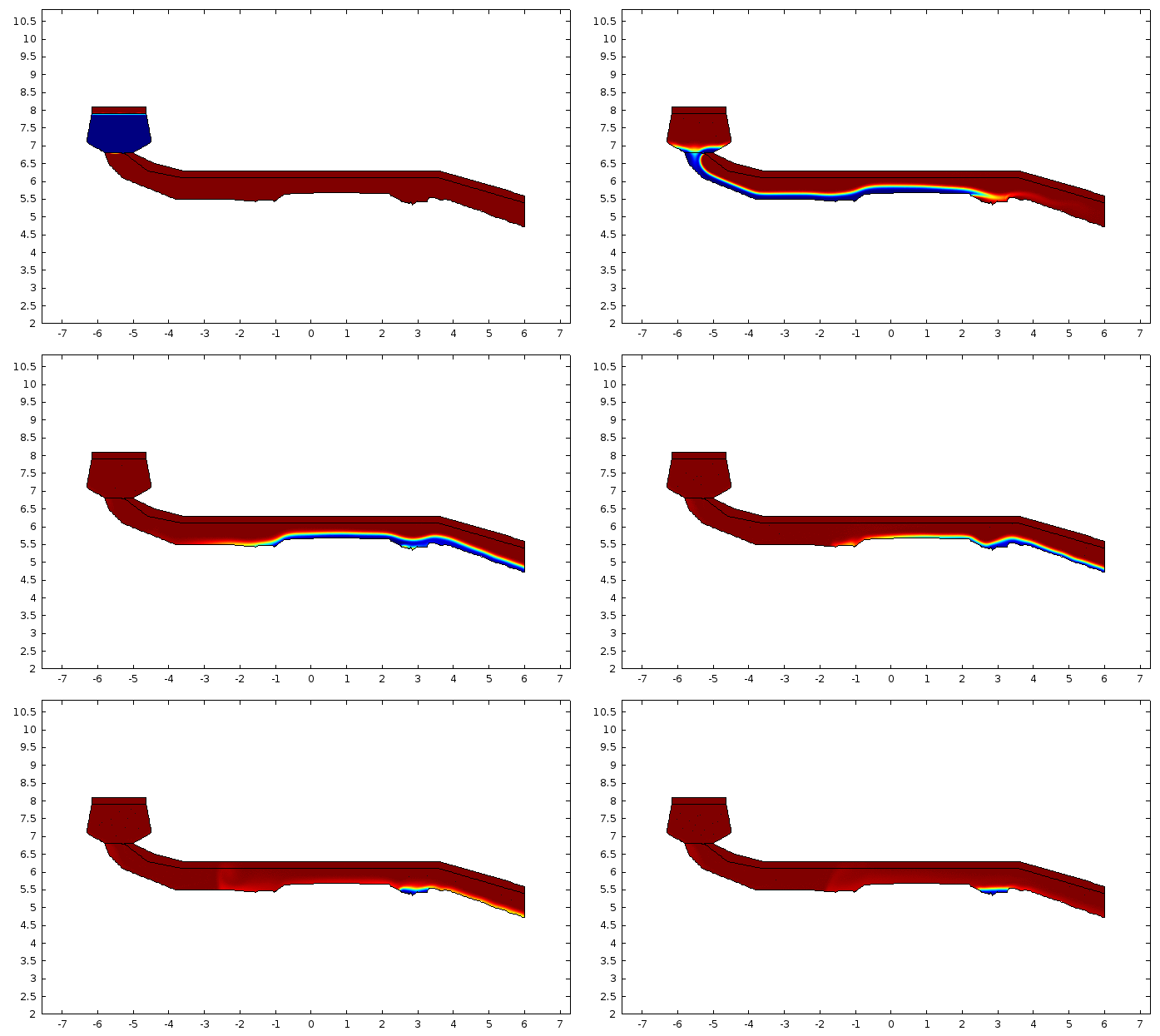
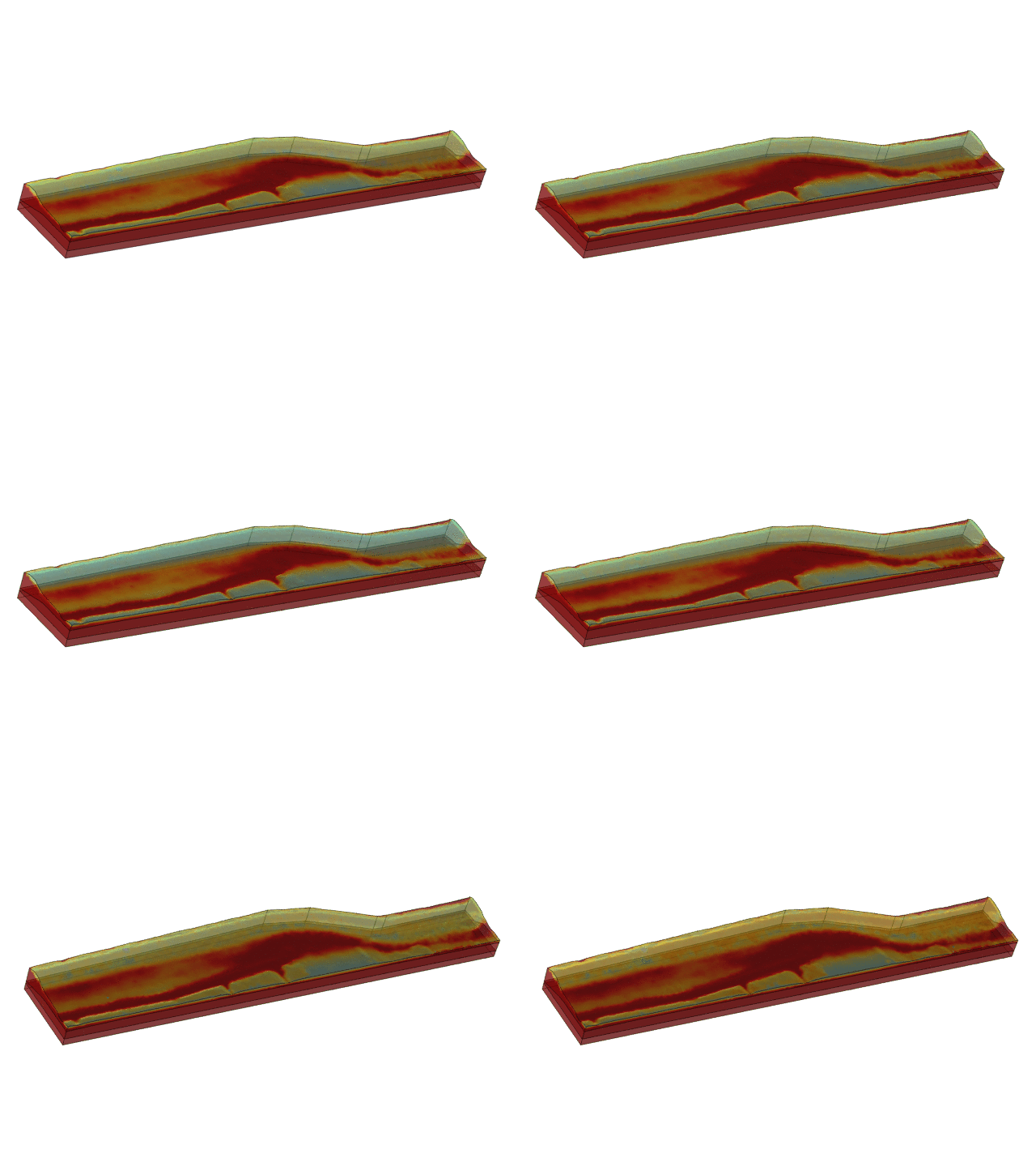
CFD simulation of air and water over a dike crest with a road, in the wave overtopping simulator.
CFD two-phase (air and water) simulation of the Wave Overtopping Simulator and the effect of a road on top of the crest of a dike (Animation by Anouk Bomers).
02

Floods and structures surrogate modelling

Physics-based models, including finite-element models of seepage, erosion and stability, are too slow to rerun at every new reading. Surrogate models are how the group keeps the physics and still answers in time for an operator.

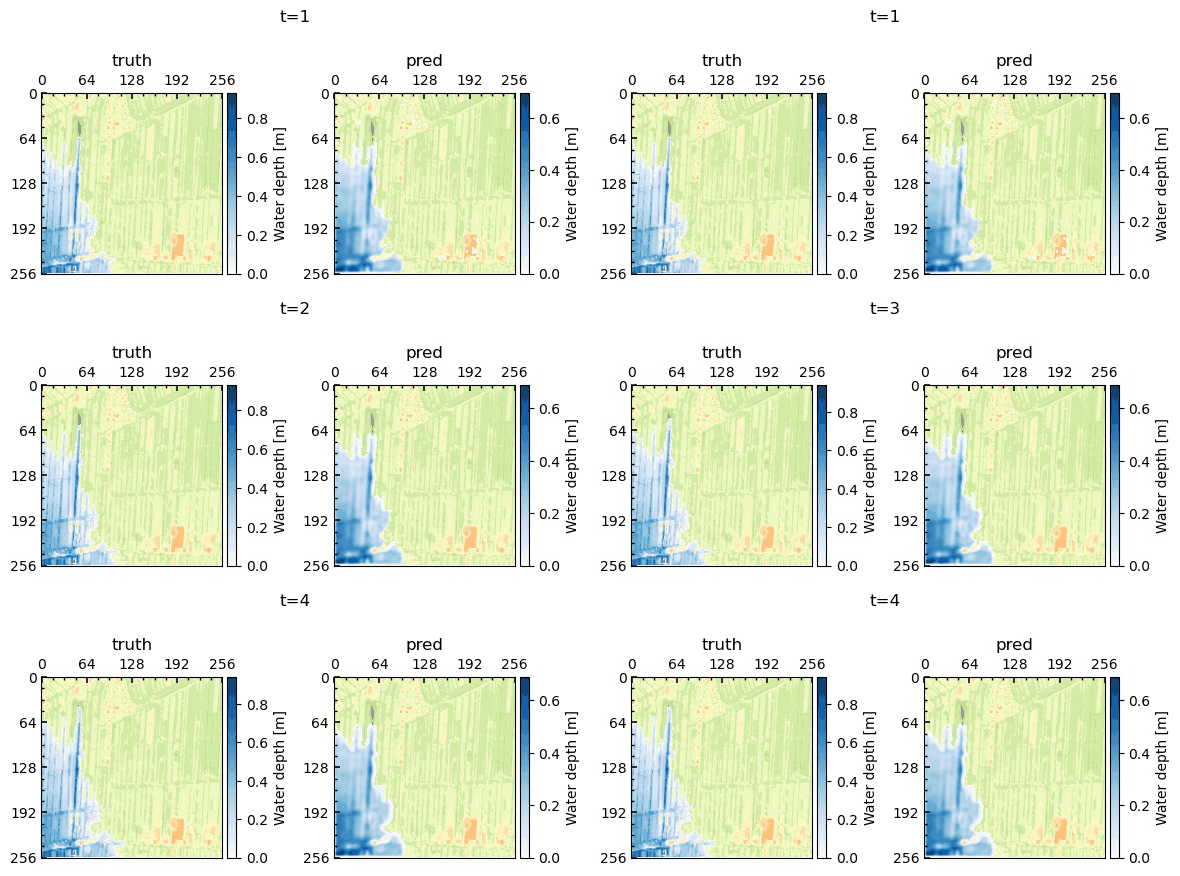
Animated flood surrogate. Water depth from the physics model, labelled truth, beside the surrogate prediction.
Water depth from the physics model beside the Surrogate prediction (Animation by Thomas Stolp).
03

Monitoring of flood defences

Fiber-optic cables in and on flood defences measure strain, temperature and acoustics along the whole asset. They suit longitudinal structures such as dikes and dams, but there is still much to understand about the inherent uncertainty between the measurement and the physics of the failure mechanisms. Thermal infrared, multispectral (RGB), lidar and InSAR are used alongside the cables.

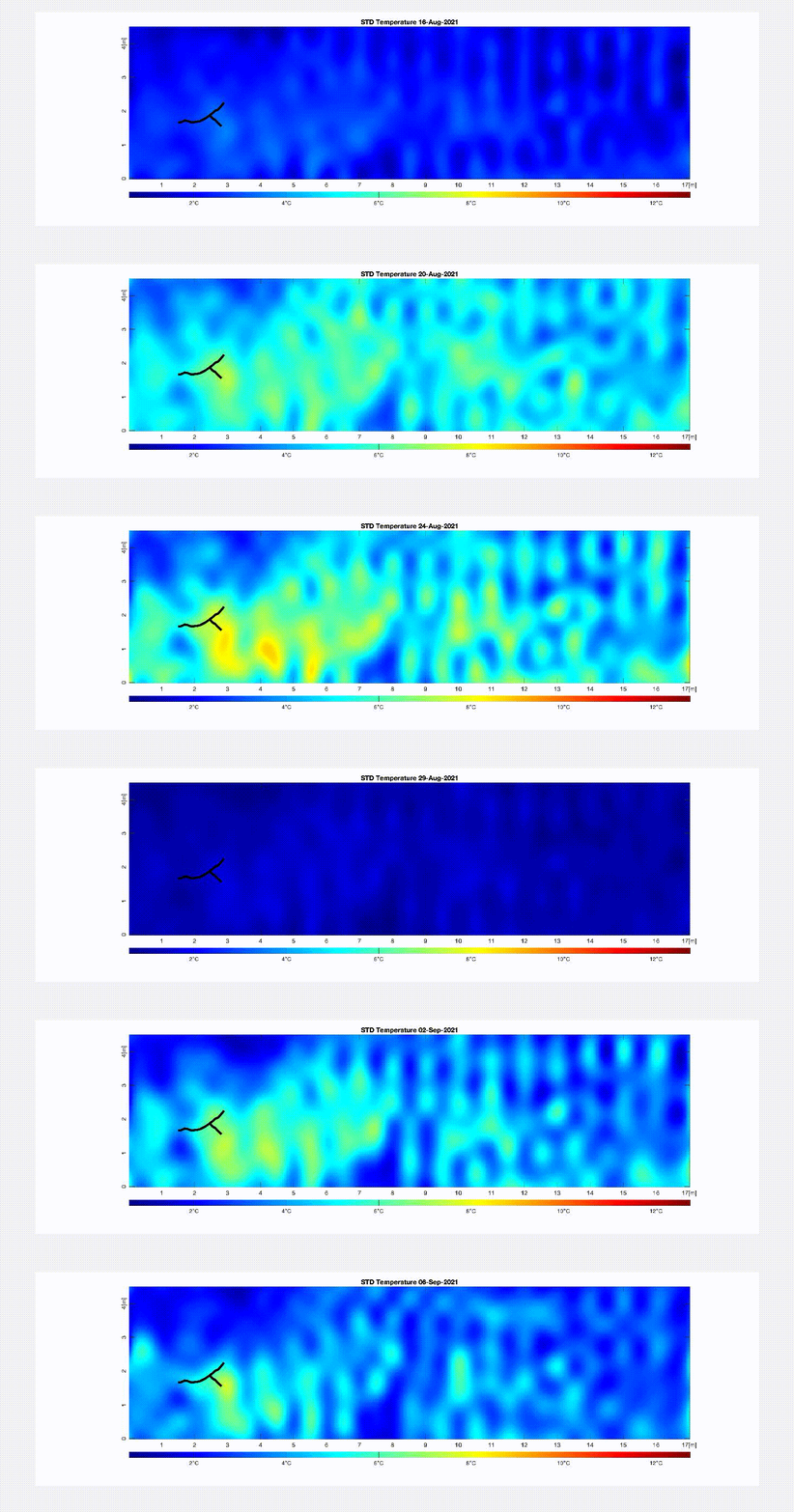
Animated kriging interpolation of temperature over a cracked dike surface, measured with fiber-optic sensing.
Kriging Interpolation of Temperature monitoring over cracked surface of Dike (Animation by Leonardo Duarte-Campos).
04

Drought effects in dikes

Drought dries the clay cover until it cracks, and those cracks change how water can enter the dike. The group follows that with fiber-optic temperature sensing, including the work in Fiber-Deep-Crack.

Animation of moisture in the Tedingerbroek polder dike at Leidschendam, from a Richards equation model.
Moisture content variation based on Richards' equation modelling of the Tedingerbroek polder in Leidschendam (Animation by Juan Aguilar-López).
05

Animal burrowing effects in dikes

Animal burrows change the inside of a levee in ways a surface inspection will not show. BEAVER is the group’s real-scale experiment on that problem, with sensing and models beside the test.